

A look back
Many people in the region are familiar with the Kerpen landfill site, known as Haus Forst, which has been in operation for decades. The Class II landfill site was in use from the 1970s until 2005, when it was closed due to the legal ban on the disposal of untreated waste. 15 years later, the unused volume provided ideal conditions for designing a new DK-I section as a landfill on top of the existing landfill. With a total volume of approx. 7.3 million tonnes or 4.4 million m³, as approved in 2018, the landfill is one of the most important disposal sites for mineral waste in the Rhineland. It officially went into operation in April 2020. Since then, up to 350,000 tonnes of non-hazardous construction and demolition waste of class DK I can be deposited there each year.
Landfill construction in two construction lots
When REMEX site manager Klaus Willms presents the project, the figures are impressive: investment costs running into millions, the installation of around 158,000 tonnes of mineral building materials and the laying of more than 400 metres of piping. “The focus of the construction project was on creating the sealing system. Wherever the new DK-I section meets the old DK-II section, there is a dual-function sealing. This acts both as a surface seal for the former domestic waste body and as a base seal for the new DK-I landfill site.” During implementation, a distinction had to be made between gently sloping and steep embankment areas (1:4 to 1:2.5). In order to be able to control the corresponding construction processes efficiently and in a structured manner, the work was divided into two construction lots.

The Kerpen concept: landfill on landfill sealing system
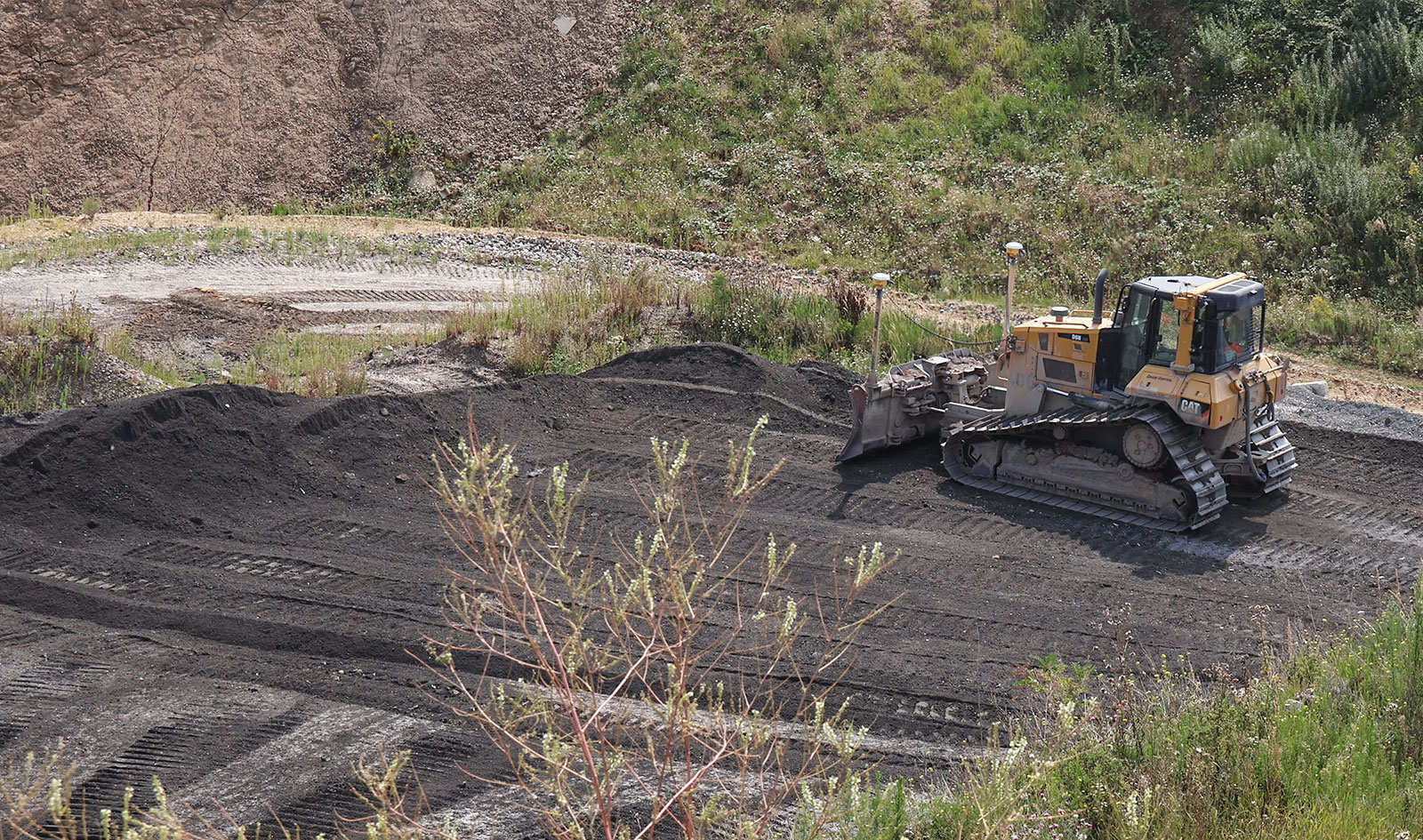
Precision and performance – construction phase 4c at a glance
- approx. 38,000 m³ of clay for the construction of the geotechnical barrier
- approx. 39,000 m² of plastic sealing membrane (smooth and textured)
- approx. 430 m of pipes laid
- approx. 23,000 m² of mineral landfill sealing protection membrane and approx. 15,000 m² of protective fleece
- approx. 82,000 t of secondary construction materials
Safety barriers
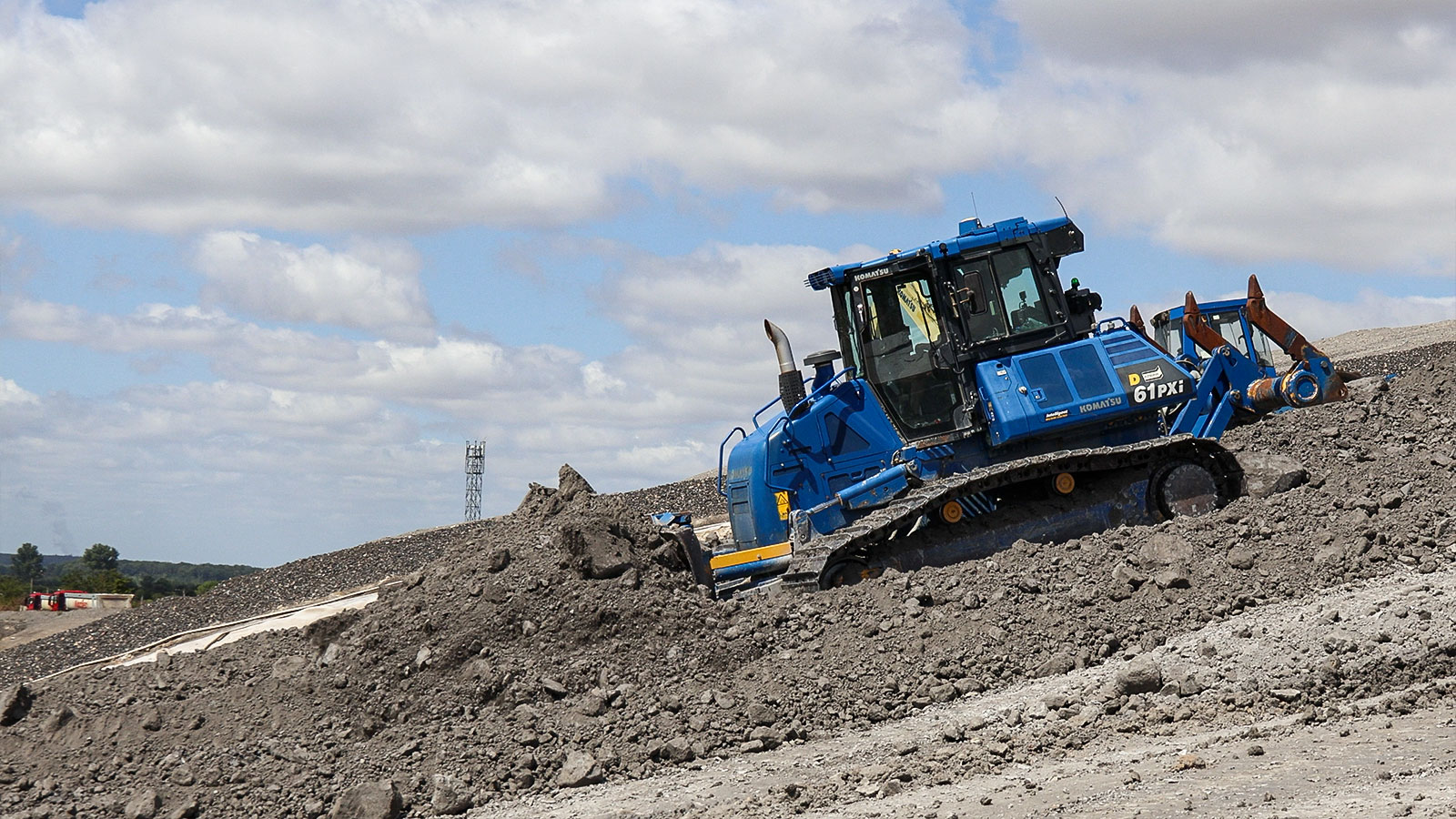
The first stage involved decommissioning the existing gas collectors and integrating new gas collection pipes into the existing gas collection system of the old landfill section. The areas of the former domestic waste body were profiled and covered with a gas-permeable base and levelling layer.
.
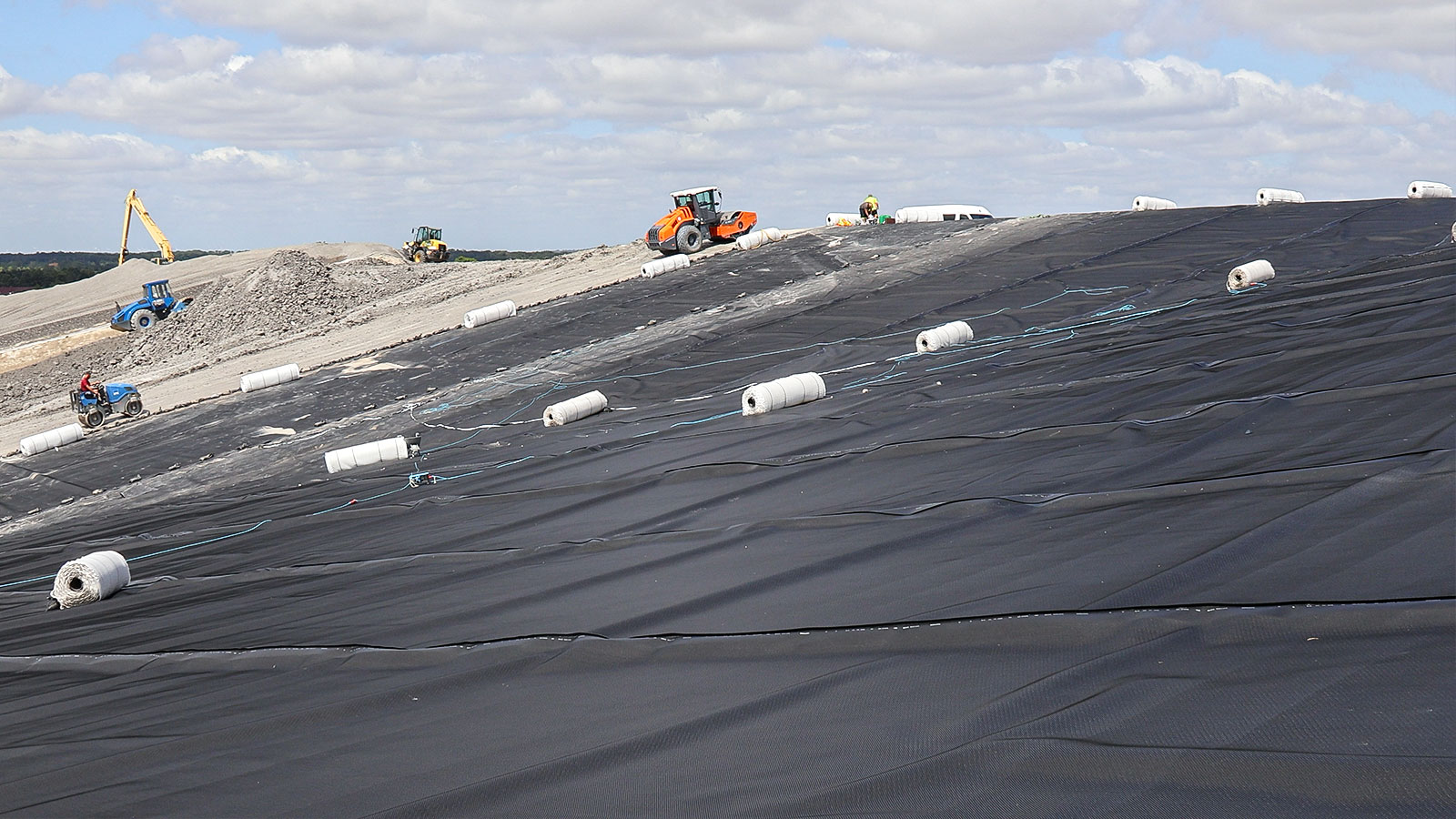
To protect the adjacent geotechnical barrier from drying out, a protective layer with a grain size of 0/8 mm was created using secondary construction materials. Only then was the 1 m thick clay barrier installed in four compacted layers, totalling approx. 76,000 tonnes. A 2.5 mm thick PE-HD plastic sealing membrane was laid on top of the uppermost clay layer.
“A key focus of the project was the consistent use of secondary construction materials. This enabled valuable primary raw materials to be saved and the goals of the circular economy to be consistently supported.”
Klaus Willms, Site Manager of the Kerpen landfill
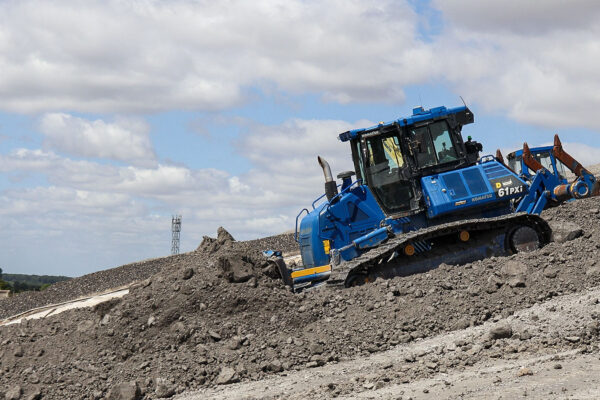
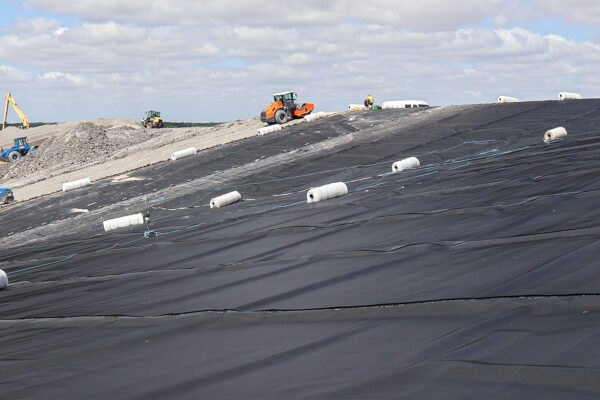
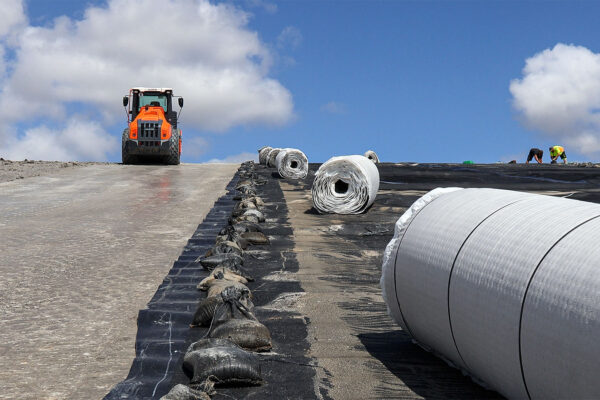
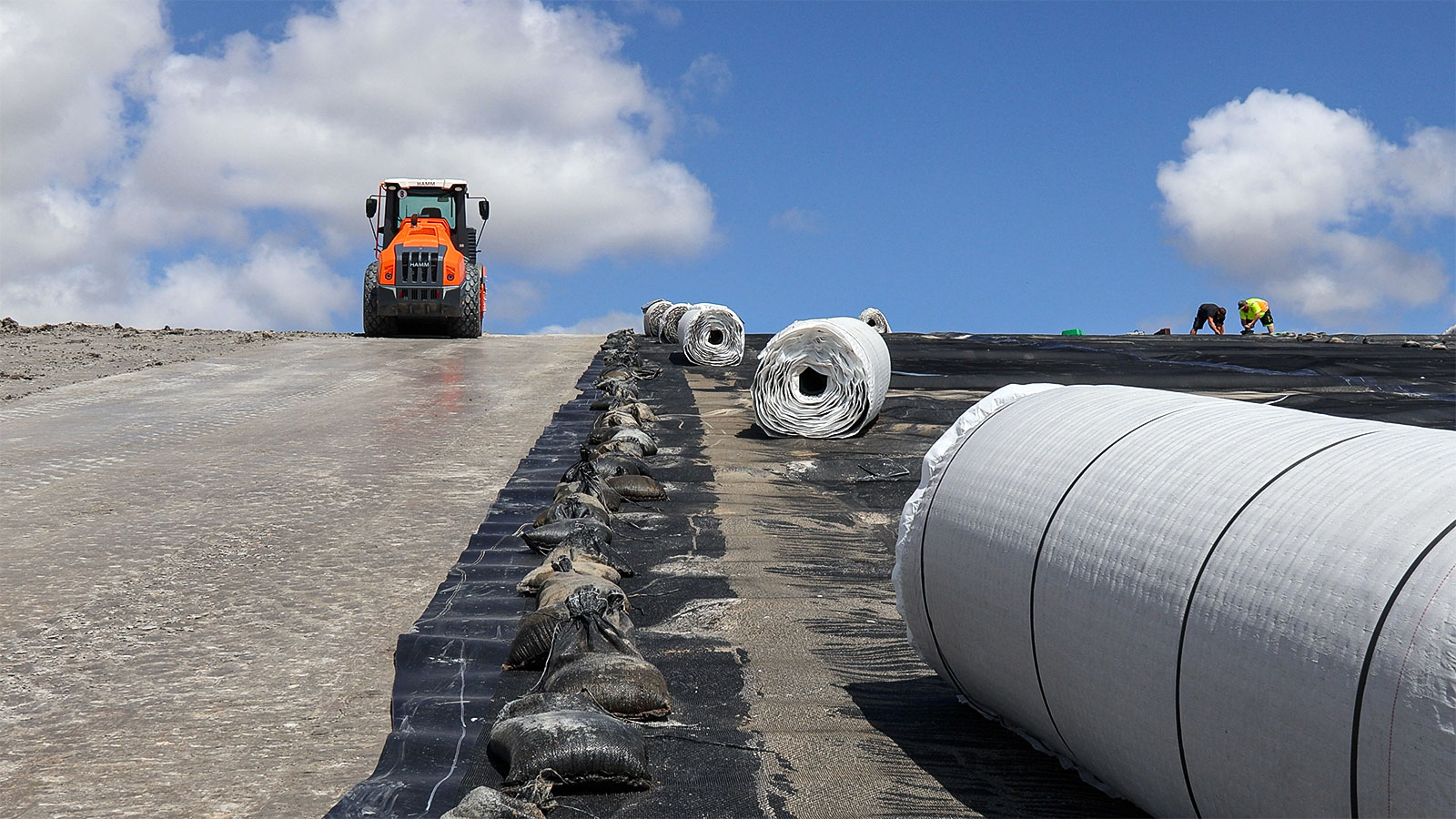
The plastic sealing membrane is protected against mechanical impact at the base of the landfill and in the gently sloping areas by an mineral landfill sealing protection membrane. In the steep areas, the protection is provided by a 1,200 g/m² fleece in combination with a 15 cm thick mineral protective layer. The drainage layer was applied with a thickness of 30 cm on the embankments and 50 cm on the base. The entire sealing system is finally protected by a 30 cm thick frost protection layer.
Sustainable landfill technology

Leachate collection
Already in 2019, the leachate shaft was built. The impressive engineering structure, which goes 17 metres deep into the ground, is part of a comprehensive leachate concept in which landfill water is collected and temporarily stored in twelve silos. To collect and drain the leachate from the new landfill section, a total of four perforated PE HD pipes were laid at its base and connected to the leachate drainage system of the existing landfill section 4b.
Secondary aggregates
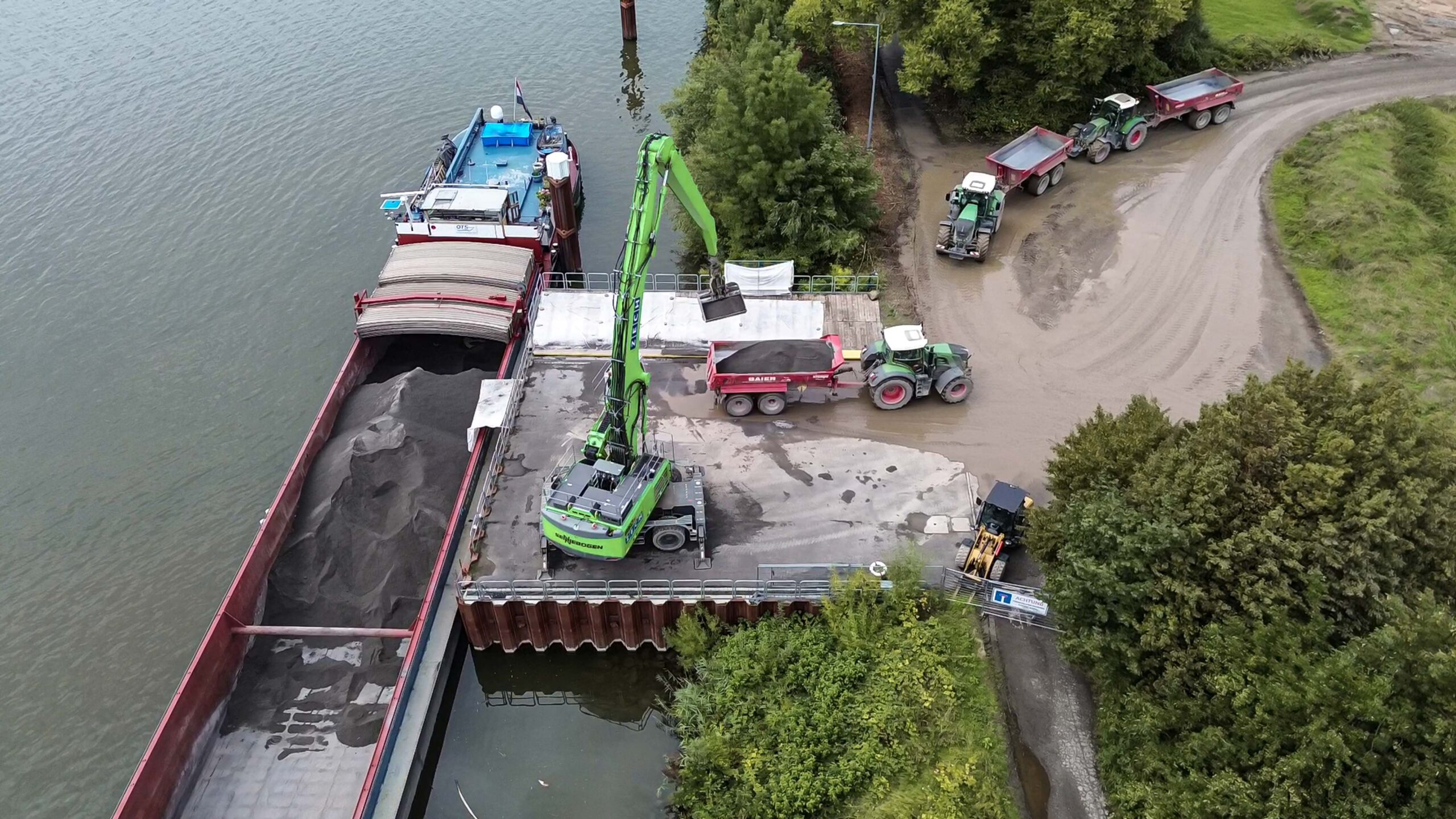
A key point of the project was the consistent use of secondary aggregates as construction materials, most of which were produced by the REMEX recycling plant in Cologne. Around 82,000 tonnes of recycled aggregates in various grain sizes were used in accordance with the specifications of the quality management plan – including for the construction of base courses and for protective and drainage layers.

Future prospects for DK II
In recent years, it has become apparent that there is a great need for further landfill options for mineral waste in the region. The Kerpen landfill site is therefore expanding its range of accepted waste: due to growing demand from companies for the disposal of Class II landfill waste, an application for planning approval was submitted to the responsible Cologne district government in October 2024. This will increase the capacity of the landfill site from the current approx. 4.4 million m³ to a total of approx. 6.8 million m³. In future, a total of approx. 3.5 million m³ of DK-I volume and approx. 3.3 million m³ of DK-II volume could then be used for storage until 2056..
The construction of section DA 4c has created a new section of approx. 4 hectares, ensuring the continued operation of the Kerpen landfill site. The expansion underlines REMEX’s role as a reliable waste management partner for the construction industry, trade and industry.
Share article