
For a well-functioning circular economy, the use of recycled materials should be the norm – and profound arguments required to explain why they are not being used.

The circular economy is a major economic driver
In its circular economy strategy, the North Rhine-Westphalia government sees a chance to establish the state as a leading centre for the circular economy in Europe and to drive forward economic renewal. The aim is to promote sustainable growth and future-proof jobs. Indeed, the circular economy is already a major economic driver in North Rhine-Westphalia: the sector generates gross value added of more than 20 billion euros and provides more than 240,000 jobs in the state – and the trend is upwards.

Find out more about the circular economy strategy of the state of North Rhine-Westphalia and the planned measures here
Circularity brings innovation and independence
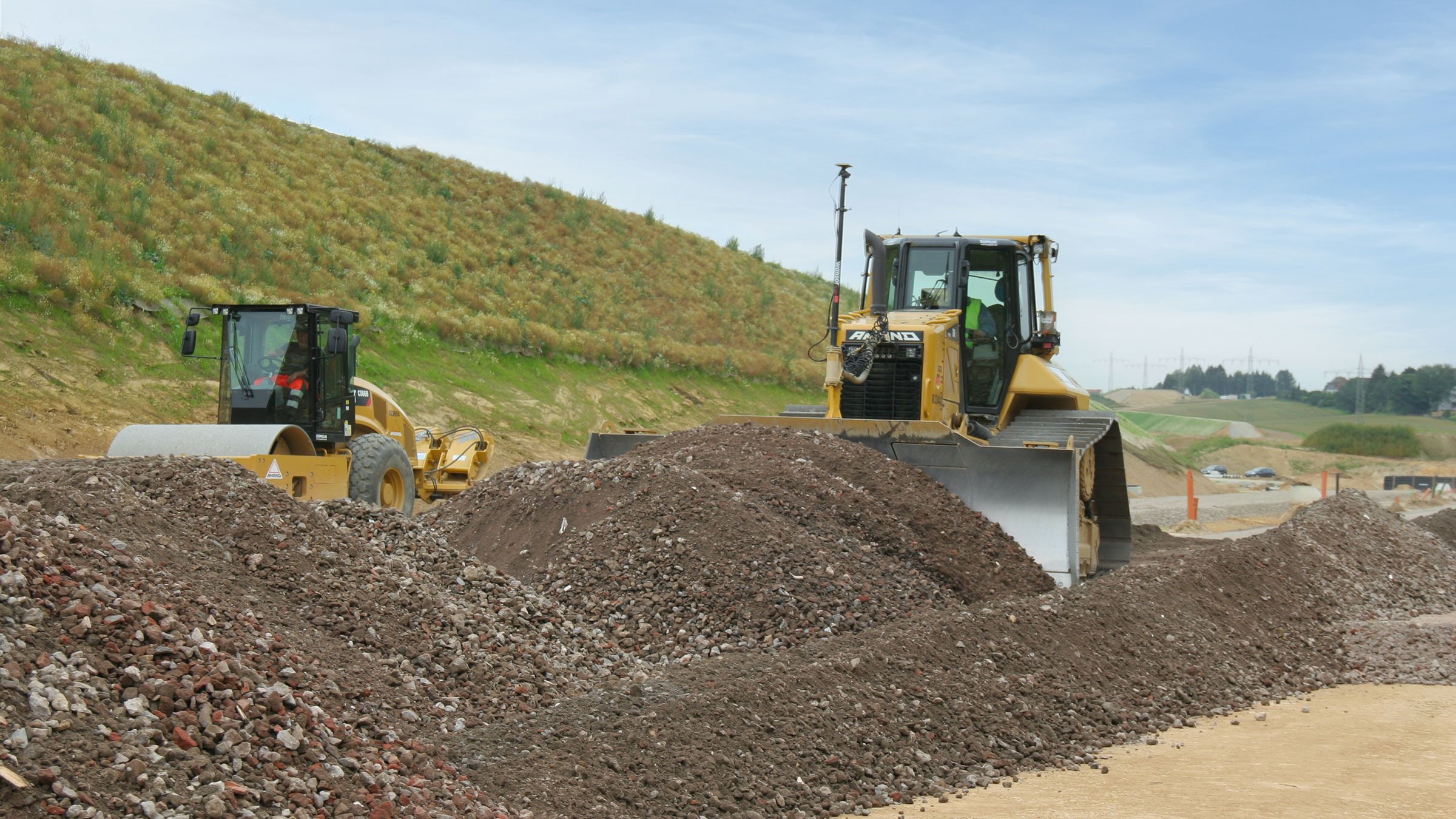
The circular economy offers enormous potential for innovation. Recycling companies are constantly working on new ways to keep materials in the cycle. At the same time, it reduces dependence on raw materials and their importers, and sets a new course for a fundamental shift in how we manage resources. Public construction projects, in particular, offer significant scope for action. The North Rhine-Westphalia state government has recognised this; its circular economy strategy includes both ‘circular construction’ and ‘secondary raw materials’. Although the National Circular Economy Act already provides for the preferential procurement of resource- and environmentally-friendly products, recycled building materials are still not consistently taken into account in tenders. This is now set to change.
“The diverse approaches of the circular economy are already a powerful driver of innovation for new business models, as well as a key factor in our industry’s competitiveness and resilience.”
Mona Neubaur, NRW Minister for Economic Affairs
The public sector as a role model in the circular economy
The problem: Existing national regulations allow too much leeway in practice. That is why the NRW initiative has come at just the right time. The announced decree can help ensure that quality-assured substitute building materials become the norm wherever they can be used technically and economically. Quality and safety are, of course, not up for debate. After all, the circular economy does not imply using inferior building materials.
Committing to circularity means keeping existing resources consistently and as long as possible within the economic cycle.

NRW’s Circular Economy Strategy as a Model for the Federal Government
The state government’s initiative should not be limited to North Rhine-Westphalia. What is being initiated in NRW should become the standard practice across the country. As the national Circular Economy Act (KrWG) is currently being revised, now is precisely the right time to tighten up § 45 KrWG and place greater obligations on the public sector nationwide. The demand is clear: where suitable recycled products and secondary raw materials are available, they must actually be given priority in public tenders. After all, a genuine circular economy must not depend on which federal state a construction project takes place in. What is set to become the norm in North Rhine-Westphalia in future should also be the case in all other federal states.
“With the NRW Circular Economy Strategy, we are creating new incentives for circular value chains. This strengthens sectors across the state and brings together economic and environmental interests.”
Oliver Krischer, NRW Minister for the Environment
With its new circular economy strategy, North Rhine-Westphalia is taking an important step towards a more sustainable use of resources. The task now is to implement this approach consistently and to prioritise recycled building materials throughout Germany.
Share article