
Surface sealing of the northern extension
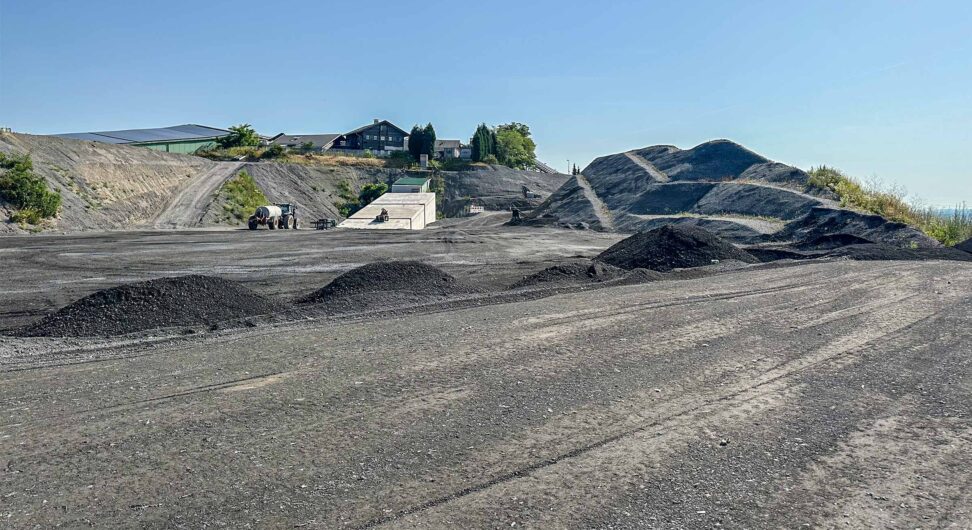
Construction of the base sealing for the northern extension began in 1999; over a period of 21 years, 1.6 million m³ of waste was deposited. The disposal phase for the northern extension has been complete since 2020, and the site is currently being decommissioned. The final phase of work on the surface sealing of the northern extension of the ZDH will be completed before the end of this year. Once this is done, the surface sealing will have been fully applied across an area of approximately 85,000 m².

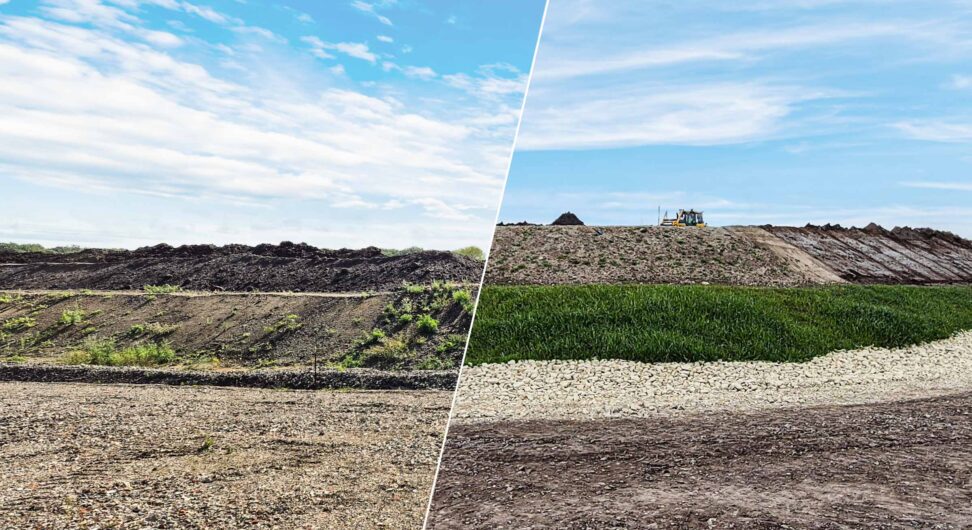
This image provides a clear view of the layered structure of the surface sealing
The first layer of the surface waterproofing system is the base and compensation layer. This provides a stable and level sub-base for the two sealing components above it: the geosynthetic clay liner and the plastic sealing membrane. The base and compensation layer is produced from quality-controlled, processed incinerator bottom ash from the REMEX facility at Düsseldorf-Wesermünderstraße.
A drainage mat is laid over the two sealing components. This channels rainwater – which, thanks to the sealing layers, can no longer penetrate the landfill – in a controlled manner into the perimeter ditches. In steeper areas, a geogrid is laid over the drainage mat and ballasted with gravel and sand. Finally, up to 2.20 m of reclamation soil – sourced on-site during the construction of the southern extension – is laid over the gravel and sand. A regional seed mixture is applied to the reclamation soil using hydroseeding and covered with an erosion control mat for protection.
Once the seed has developed a dense cover of grass, the areas will be managed using sheep. This extensive management promotes the development of species-rich vegetation and creates valuable habitats, enabling numerous insect and animal species to re-establish themselves.

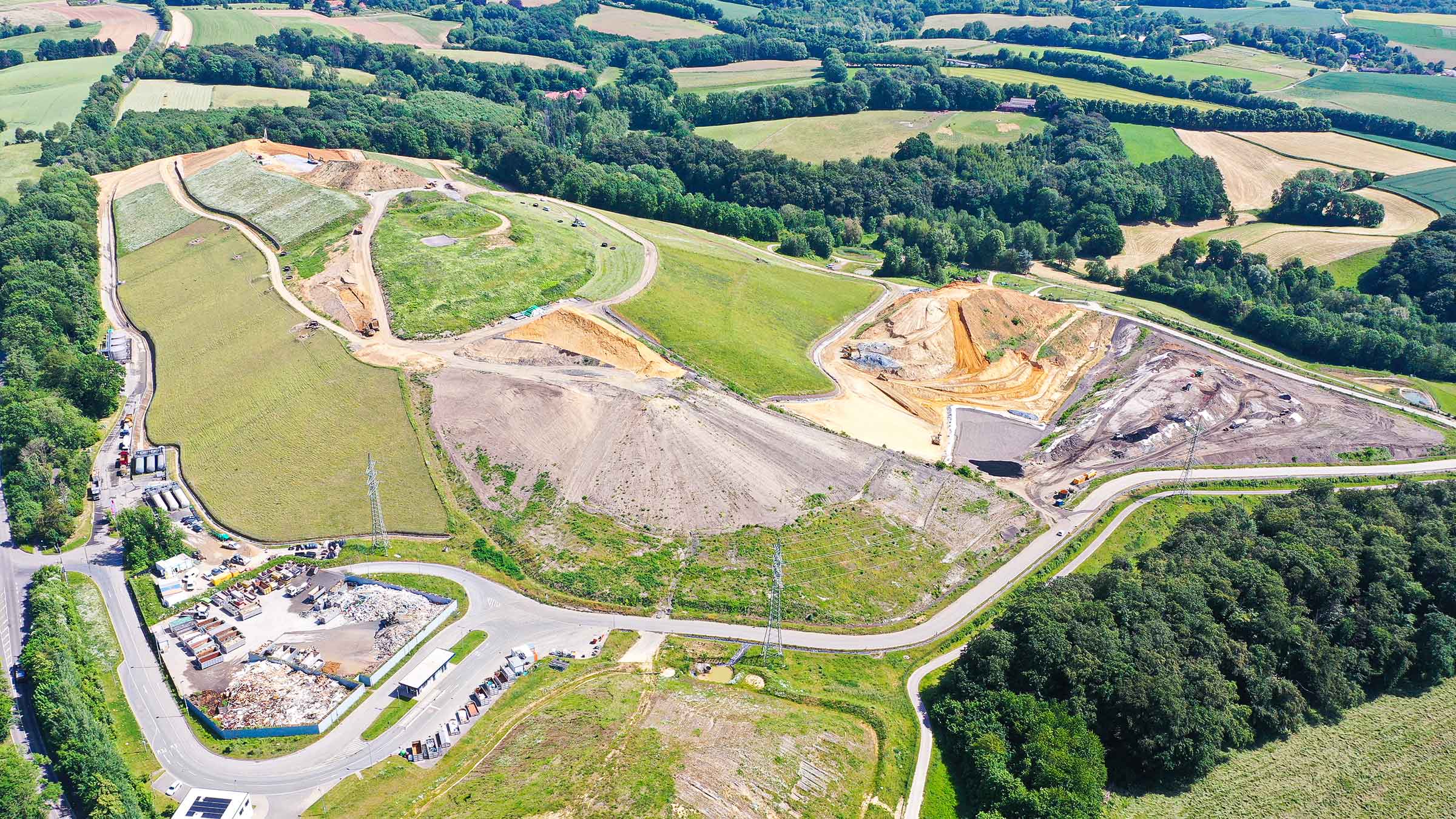
The grey area has been profiled with bottom ash from municipal solid waste incineration, and the coarse sand is being spread over the white geotextile. Reclamation has been completed on the green areas.
Construction of the second phase of the southern extension
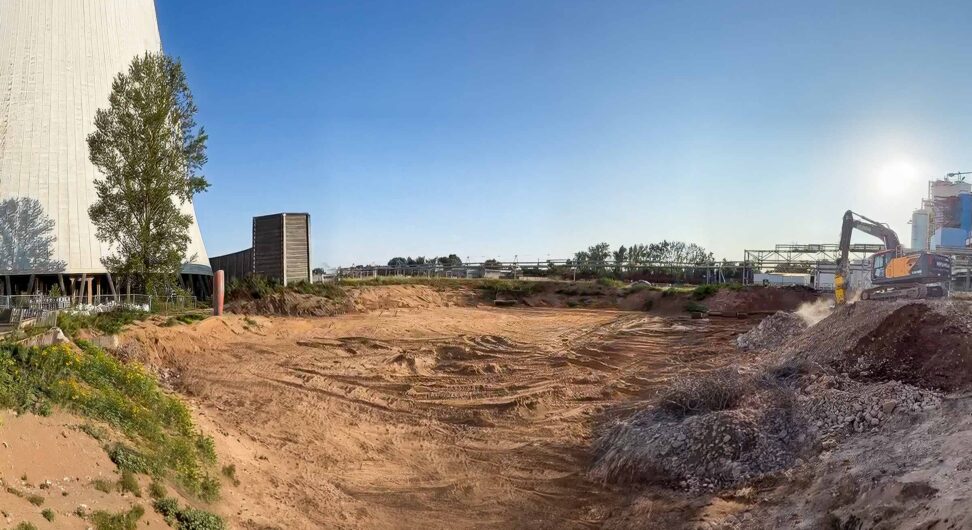
With the new construction phase 2.2, the ZDH is developing a disposal capacity of around 298,700 m³ for DK-II waste in the southern extension that in total measures 2.6 million m³. To achieve this, the existing soil will first be excavated. This soil will be reused on site and incorporated into the reclamation layers of other landfill sections.aut.
Once excavation down to the landfill base has been completed, the geological barrier will be constructed. As the naturally occurring soil only partially meets the required properties of a geological barrier, it will be technically enhanced. To this end, two layers of clay, each 0.25 m thick, will be installed. The mineral seal, which also consists of two layers of clay, each 0.25 m thick, is then constructed on top of the geological barrier.

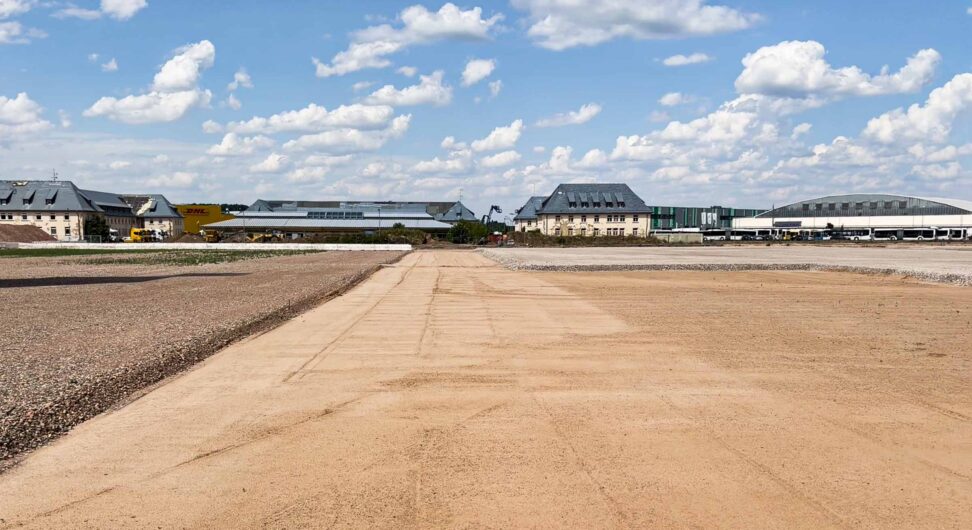
In the foreground on the left of the image, the prepared area for the landfill base can be seen. To the right of this, the section of the landfill base that has already been constructed is visible. In the background is construction phase 2.1 of the southern extension, which has already been backfilled. To the left lies the pile of excavated geogenic soil.

Setting up construction phase 2.2 of the southern extension of the base
Once the mineral sealing layer has been completed, a BAM-certified synthetic sealing membrane (KDB) is laid as the second sealing component. A geotextile is applied to protect this sealing membrane.
On top of this, a protective layer is formed using crushed and screened road rubble with a grain size of 0/8 mm. This protective layer is followed by the drainage layer, which also consists of recycled road rubble, but with a coarser grain size of 8/32 mm.
The landfill construction materials used for the protective and drainage layers are recycled from waste and originate from REMEX’s Cologne-Gotlandstraße plant.
Vorbereitende Arbeiten der Oberflächenabdichtung des ersten Abschnitts der Süderweiterung
In diesem Jahr beginnt ein weiterer Meilenstein für die Süderweiterung der Deponie, es wird mit dem Bau der Oberflächenabdichtung und der Rekultievierungsschicht des ersten Bauabschnitts 2.1 begonnen. In 2018 wurde die Süderweiterung der Zentraldeponie Hubbelrath von der Bezirksregierung Düsseldorf genehmigt. Nach Erhalt der Genehmigung wurde im gleichen Jahr mit dem Bau der Süderweiterung begonnen. Der erste Abschnitt wurde 2019 für die Verfüllung in Betrieb genommen und wurde bis 2025 verfüllt. Dabei wurden ca. 675.000 m³ in den ersten Bauabschnitt der Süderweiterung eingelagert.
Die Oberflächenabdichtung wird im ersten Abschnitt auf ca. 27.000 m², mit dem gleichen Aufbau wie bei der nördlichen Erweiterung aufgebracht. Die Baumaßnahme soll in 2027 abgeschlossen werden.
Insgesamt sind neun Bauabschnitte für die Herstellung der gesamten Oberflächenabdichtung der Süderweiterung geplant. Diese werden in den nächsten 10 bis 15 Jahren, sukzessive nach Verfüllung der eingerichteten Bauabschnitte aufgebracht.

The area of the surface seal is outlined in black; the area marked out for base 2.2 is outlined in red
“The parallel construction works demonstrate the ongoing expansion and sustainable development of the Hubbelrath Central Landfill – from the creation of new landfill capacity to the environmentally sound reclamation of completed sections.”
Jochen Vogel, Site Manager of Zentraldeponie Hubbelrath
Share article