
The landfilling areas
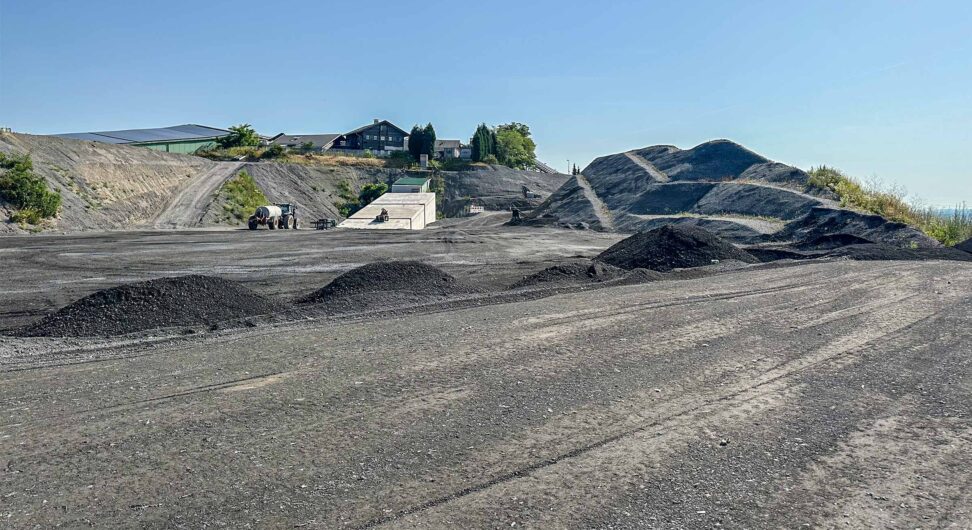
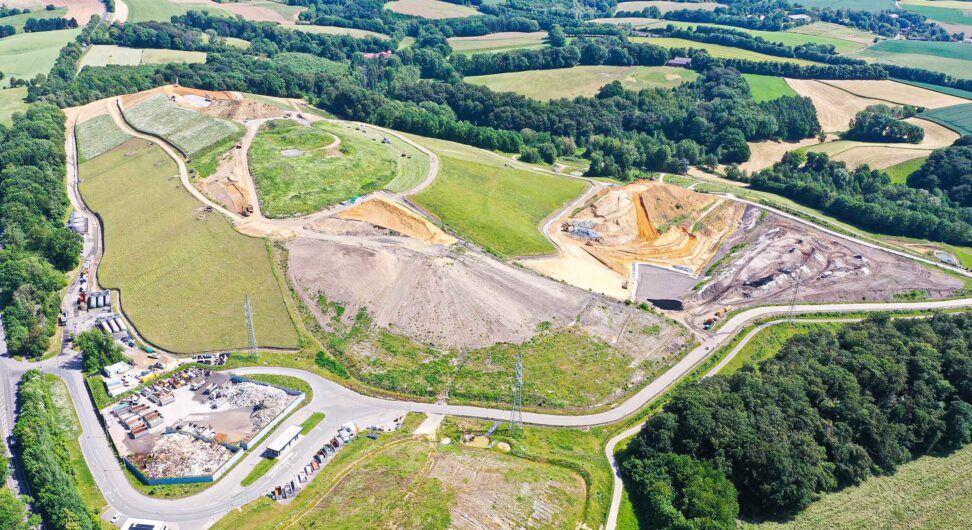
The backfilling of the site, which covers around 8.5 hectares, is carried out in two phases; the first phase is currently ongoing. It begins in the south-east and covers an area of around 40,000 m². The original plan was to fill the two disposal areas of the first construction phase consecutively and to construct a surrounding embankment ahead of the disposal area, which would minimise both emissions and the visibility of landfill operations. Although numerous trees and shrubs screen the landfill site during operational use, this approach would still have left open views from the west and north for a considerable period. Optimising this situation was the aim of the requested change of permit, which was submitted and approved in 2024.
Early recultivation measures
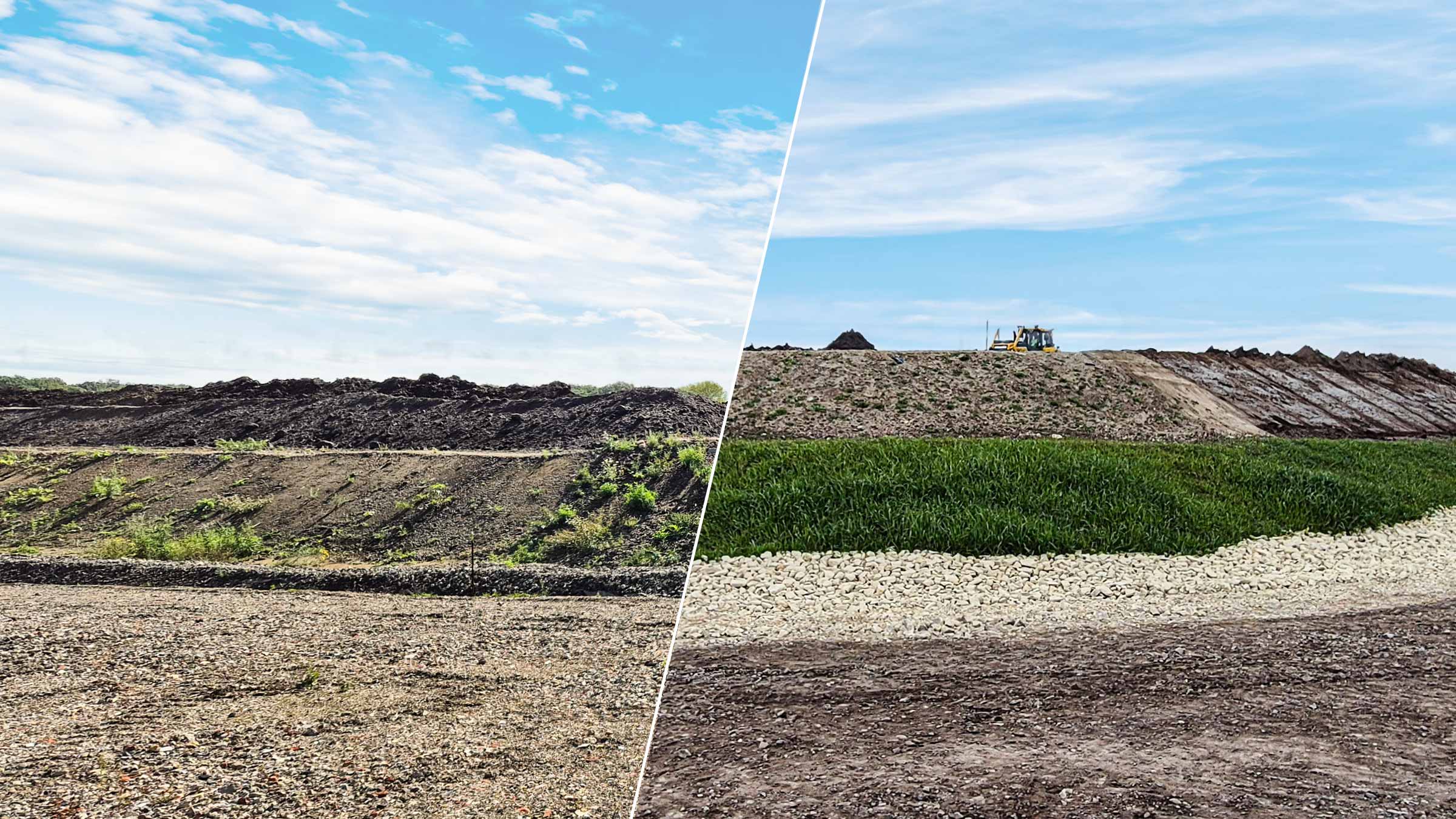
From the very outset of the planning approval process for the Dülmen landfill site, great emphasis was placed on recultivation. Accordingly, by the end of the landfill’s operational life, a landscape feature will have been created that blends harmoniously into the surrounding environment. This is a look that the landfill site is already beginning to achieve thanks to the newly adopted concept. Instead of carrying out the reclamation of disposal areas 1 and 2 in two stages, REMEX has, on the basis of the amendment notice, begun reclamation of the south-eastern perimeter area much earlier than planned. Both disposal areas of the first construction phase are being backfilled across their entire surface simultaneously, and the perimeter embankments – starting from the south-east and extending towards the north-west – are already being constructed and reclaimed in advance.

The accelerated recultivation concerns the areas on the plateau and the perimeter areas of the first construction phase
Implementation during construction
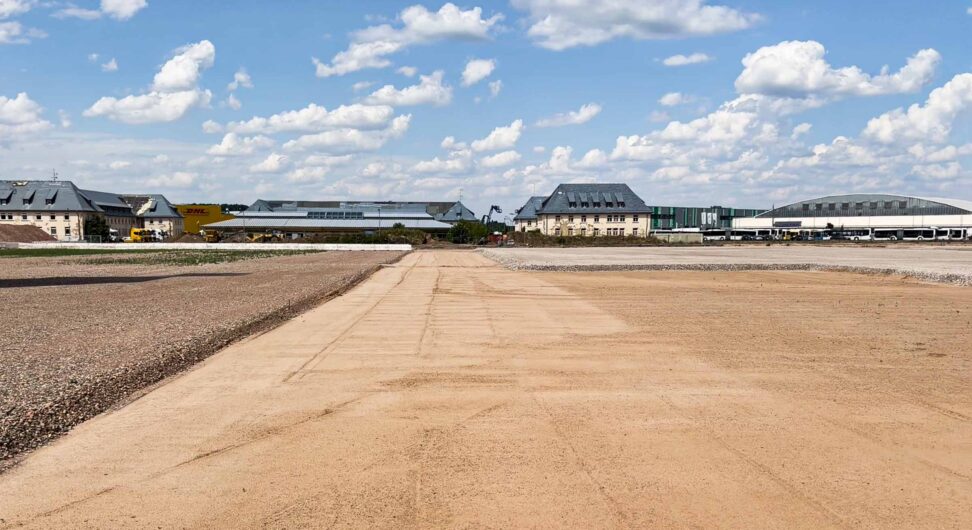
The concept for integrating the landfill more quickly into its natural surroundings involves surrounding the first section of the landfill site – which is to be landscaped – with an embankment that, like a formwork, is consistently higher on the outside than the area to be backfilled inside. To achieve this, the formwork will be built up in layers to a height of around 3 m, and in some areas in the south-east even 5 m. The embankment structure will be levelled and covered on the sides and top with soil, which REMEX produces from uncontaminated soil in accordance with specified quality management standards. Subsequently, a spray-seeding system – a regional grass seed mix agreed with the district authority – is applied; this germinates quickly and thus gives the landfill site a natural appearance after only a short time. Furthermore, the vegetation also protects the surrounding embankments from being washed away by rain.
At the foot of the embankment, the landfill site has a perimeter channel to drain surface water from the reclaimed areas. The planning approval from 2021 had originally envisaged a concrete structure. Here too, a more natural design has now been chosen, consisting of coarse natural stone obtained on-site by screening uncontaminated soil.

The accompanying video in our video library shows how reclamation is carried out at the second level.
Watch video
Umsetzung des neuen Rekultivierungskonzepts

1. The perimeter embankment for the first construction phase will be built up in layers to form a continuous boundary around the backfill area.

2. Auf den modellierten Randwall wird qualitätsgesicherter Rekultivierungsboden als Grundlage für die spätere Begrünung aufgebracht.

3. The embankment has been covered with topsoil and prepared for subsequent planting.

4. A natural-looking drainage channel made from locally sourced natural stone is used to collect surface water from the reclaimed areas.

5. On the second level, the embankment is further built up by placing and compacting the embankment material.

6. As the reclamation soil layer is laid, the areas on the second level are also being prepared for vegetation.
The landfill Dülmen key facts
The Dülmen-Rödder landfill site has an authorised total capacity of 960,000 m³ and, with annual disposal volumes of around 45,000 m³, is expected to remain in operation for 20 years. The landfill site is operated by REMEX Coesfeld GmbH, which has been active at this site for more than 30 years and operates a recycling plant on the site for mineral construction waste such as soil, construction and demolition waste.
You can find out more about the DK-0 landfill site in Dülmen-Rödder and the services provided by REMEX Coesfeld GmbH on the German website remex-coesfeld.de
Thanks to the early land reclamation work in Dülmen, the landfill site is already being integrated into the landscape. The use of natural, locally sourced materials in its construction encourages the establishment of regional flora and fauna.

Share article